Neighbour’s Tree Hanging Over Your Fence? Your Rights in New Zealand
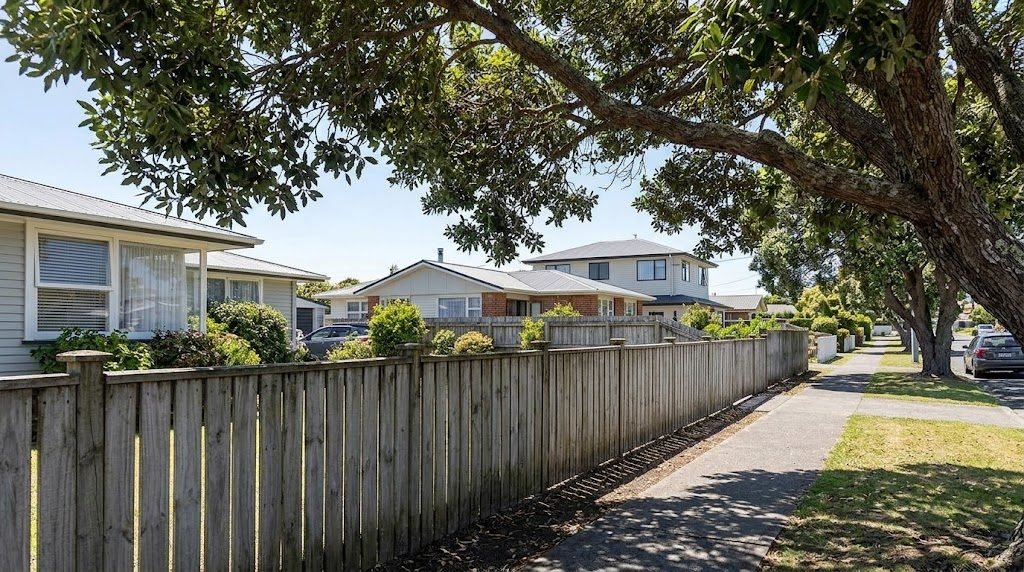
Nothing ruins a decent relationship with your neighbour like an overhanging tree dropping mess across your driveway or blocking your afternoon sun. It is an annoying situation. However, going rogue with a handsaw is not the play.
Knowing your legal rights keeps things civil and saves you from accidental legal stress. If you are dealing with encroaching branches, pairing proper property boundary rules with professional tree pruning and canopy care keeps your yard clear while keeping the peace.
The Right Every New Zealand Property Owner Already Has
Under New Zealand common law (the right of abatement), you have the immediate legal right to cut back any branches or roots crossing over your boundary line. You do not need court approval to tidy up what crosses into your airspace.
However, strict limits apply. You can only cut precisely up to the legal boundary line.
- You cannot cross the fence
- Trim parts of the tree on their side
- Set foot on their land without explicit permission.
Doing so is considered trespassing and property damage.
The Rule Most People Forget
Here is the catch that surprises most homeowners: the cut branches, fruit and wood still legally belong to the tree owner.
That means you cannot legally keep the wood for your fireplace or dump the debris over the fence. Throwing cut branches over the boundary fence is classed as illegal dumping and usually sparks an immediate dispute. The best approach is to ask your neighbour if they want the green waste back. If they say no, you can dispose of it yourself.
Where the Boundary Actually Sits
Do not assume your timber fence marks the exact legal boundary line. Boundary fences are often offset by several inches. Thus, what looks like your side might actually belong to your neighbour.
If you are trimming close to the limit, checking survey pegs saves you from accidental trespassing. Furthermore, if a tree’s trunk grows directly on the boundary line, the tree is jointly owned by both properties. Joint ownership means neither neighbour can prune or remove the tree without the other person agreeing.
When It Stops Being a Neighbour Problem and Becomes a Legal One
When a neighbour refuses to deal with a dangerous or nuisance tree, Sections 333 to 335 of the Property Law Act 2007 give you legal options. You can apply to the District Court or Disputes Tribunal for an order forcing them to trim or remove it.
Courts consider three primary grounds:
- Actual or potential damage to your property or structures.
- Direct risk to life, health, or safety.
- Undue obstruction of light, views or solar access.
The court weighs hardship on both sides. If your claim is minor, bringing legal action can end up costing you more in legal fees than the job is worth.
The Conversation That Solves Most of These
Legal battles are expensive and stressful. Most overhanging tree disputes get solved over a quick chat:
- Speak in Person First: Walk over for a casual, friendly chat before putting anything in writing.
- Follow Up in Writing: Send a short, polite email outlining what you discussed so you both have a clear paper trail.
- Offer to Split Costs: Offering to share the cost often resolves the issue instantly.
- Get an Independent Assessment: Hiring an arborist provides an unbiased opinion both sides can accept.
If the issue involves runaway greenery, setting up regular hedge trimming or complete hedge removal keeps boundary lines manageable
Who Pays, In The Four Situations We See Most
Who pays for the trimming usually comes down to who wants the work done and why:
- Trimming for Light or Aesthetics: If you want branches trimmed simply to improve your view or tidy up, you pay for the work on your side.
- Tree Causing Active Damage: If roots or branches are damaging your fence, driveway or pipes, the tree owner is generally responsible for costs.
- Shared Benefit: If trimming benefits both properties, the fair path is a 50/50 cost split.
- Rental Properties: The property owner is responsible for major tree decisions. Reach out to the property manager to coordinate.
If you suspect whether council consent is needed due to heritage protection on the property, check local rules before arranging any heavy cutting.
Getting the work done without making it worse
Hacking away at a boundary tree yourself can damage the tree’s health or send heavy limbs crashing through a fence. Incorrect cuts cause decay. Plus, it makes the tree unstable and creates a massive liability issue for you down the road.
Using a qualified arborist ensures all cuts are made cleanly outside the branch collar. Professionals use proper rigging to drop limbs safely, carry full public liability insurance and leave the property spotless.
Frequently Asked Questions
Can I cut branches that hang over my fence in New Zealand?
Yes, under the common law right of abatement, you can cut back overhanging branches and roots up to your legal boundary line. However, you cannot cross the boundary line, enter your neighbour’s property or damage the overall health of the tree.
Do I have to give the cut branches back to my neighbour?
Legally, yes. Cut branches, fruit, and wood belong to the tree owner. You should offer them back first. However, do not throw them over the fence without permission. This is considered illegal dumping.
Can I make my neighbour cut their tree down?
You cannot force a neighbour to remove a tree without a court order under the Property Law Act 2007. To win an order, you must prove the tree poses a safety risk, causes structural damage or unduly obstructs your light or view.
Who pays when a neighbour’s tree damages my fence?
If a neighbour’s tree actively damages your boundary fence or property, the tree owner is generally responsible for repair costs. It is best to document the damage with photos and discuss it politely before making repairs.
Does New Zealand have a high hedges law?
No, New Zealand does not have a dedicated high hedges statute like the UK. Disputes regarding tall hedges blocking views or sunlight are dealt with under Sections 333 to 335 of the Property Law Act 2007 through the Disputes Tribunal or District Court.
Got a Neighbour’s Tree Hanging Over Your Property?
Don’t let overhanging branches turn into a bigger problem. Prime Tree Services can safely trim the tree back to your boundary and leave your property tidy when the job is done.
You will receive a clear written quote before any work begins. Our team is fully insured and experienced in handling tricky trees around homes, fences and other properties.
Call 0800 123 113 or book your free quote today.
Neighbour’s Tree Over Your Fence? Your Rights in New Zealand
What New Zealand law lets you cut, who pays for the work and how to settle an overhanging tree or hedge problem with your neighbour without going to court.
This article provides general information only and should not be considered legal advice. Take professional legal advice before taking action in a boundary dispute.