Tree Removal Near Power Lines Done Safely
A branch brushing a service line may look like a small garden-maintenance job. It is not. Tree removal near power lines changes the entire plan: where a tree can be cut, how each piece is lowered, who needs to be involved, and whether the work can proceed at all. A rushed cut can damage a line, put people at risk, or leave a property with a much bigger problem than an overgrown tree.
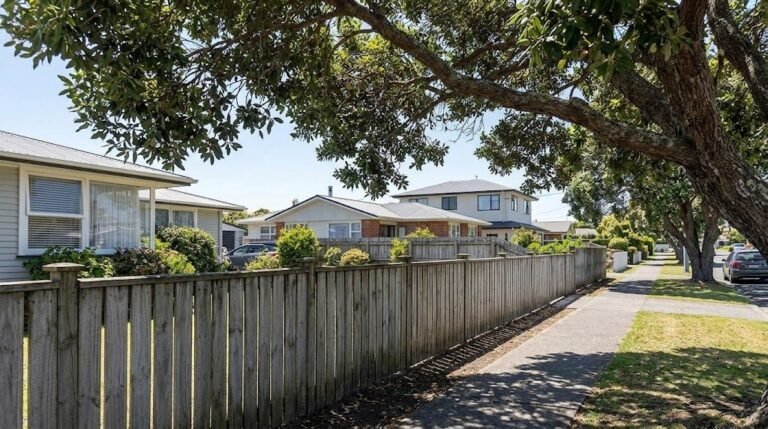
For Tauranga and Bay of Plenty property owners, this situation is common. Mature shelter trees, palms, conifers, and self-seeded growth can quickly reach overhead lines along driveways, boundaries, and older sections. The right response is a proper site assessment, not a ladder, a chainsaw, and a guess.
Why tree removal near power lines needs a different plan
Electricity can travel through branches, tools, ropes, ladders, and the ground. Even lines that appear insulated or inactive must be treated with caution. Wind can also move branches and conductors without warning, while a tree that is stable on one side may shift once limbs are removed.
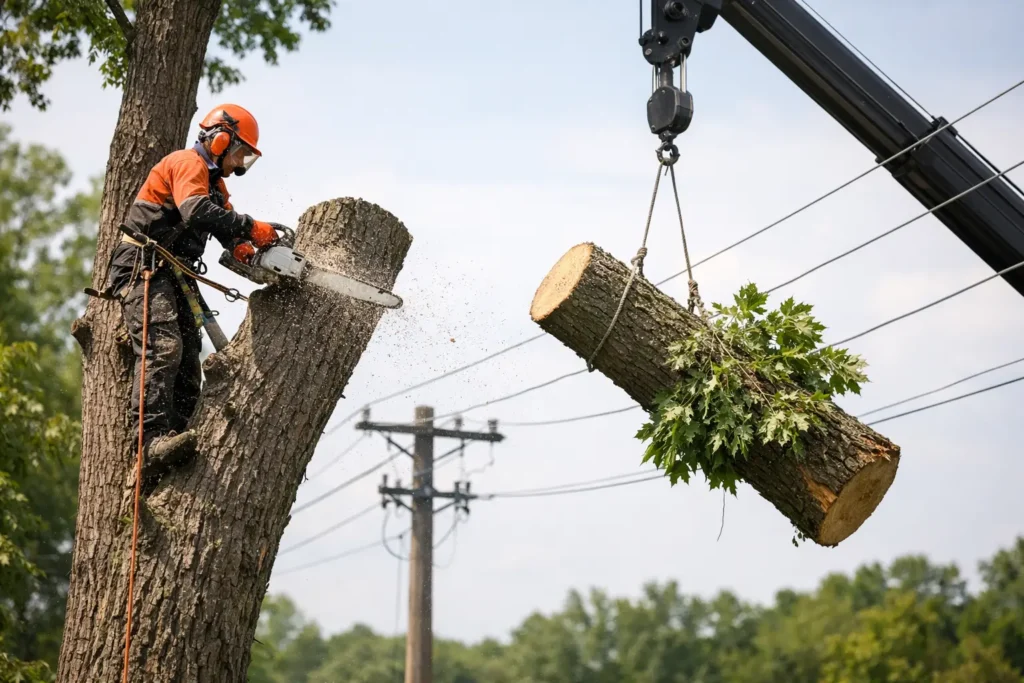
The risk is not limited to the person doing the cutting. A falling limb can pull on a service connection, land across a driveway, damage a roof, or drop into a neighbor’s property. On confined Tauranga sites, there may be little room to safely lay down timber in one piece. That usually means the tree needs to be dismantled in controlled sections rather than simply felled.
There is also a practical issue: the lines may not all be owned or managed by the same party. A line running from the street to a house, telecommunications cables, and electricity infrastructure can each require a different approach. The utility provider may need to assess the situation, isolate power, trim its own equipment, or confirm what work can be completed near its network.
A capable tree crew does not treat overhead services as an inconvenience. They are one of the first site hazards considered when choosing the method of removal.
Start by identifying the immediate risk
If a branch is resting on, wrapped around, or visibly pulling a line, keep people, pets, vehicles, and equipment away from the area. Do not try to lift the branch off with a pole, rope, ladder, or garden tool. Do not touch a fence, gate, or other object that may be in contact with a fallen line.
Contact the electricity utility or emergency services if there is a downed line, sparking, arcing, a damaged pole, or an immediate danger to people or property. After the urgent risk is addressed, a professional tree assessment can determine what vegetation work is needed to prevent the problem returning.
Less urgent signs still deserve attention. These include branches growing steadily toward lines, repeated rubbing during windy weather, a leaning tree beneath overhead services, dead limbs over a connection, or a tree that has become too large for its position. Waiting until a storm breaks a limb often removes the opportunity to plan the job well.
What a professional assessment should cover
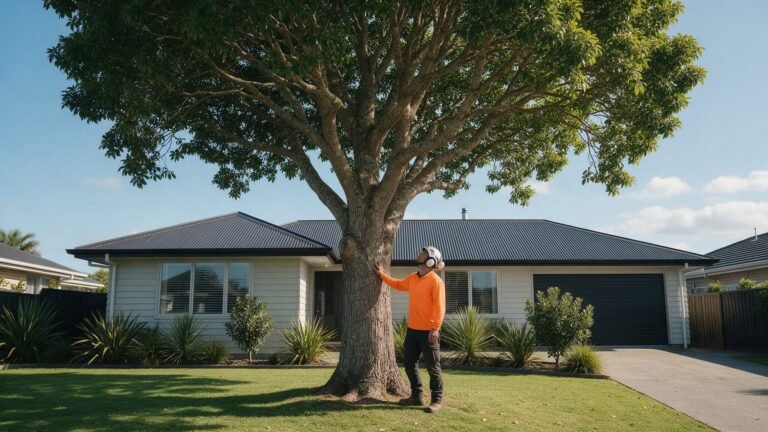
Every tree near overhead services is different. A small ornamental tree beside one house connection calls for a different method than a tall gum on a sloping lifestyle block or a dense hedge growing along a roadside boundary.
At an on-site assessment, the key questions are straightforward. What type of lines are present? How close are the branches and trunk? Is the tree sound, leaning, dead, split, or storm-damaged? Is there a clear drop zone? Can equipment reach the work area without damaging lawns, paving, gardens, or drainage? And where will the cut material go?
The answers determine whether the best outcome is careful pruning, crown reduction, complete removal, or staged work coordinated with the utility. Sometimes removing only the limbs causing the problem is the sensible choice, particularly where the tree is healthy and has value for shade, screening, or privacy. In other cases, repeated trimming will only delay an inevitable removal. A tree that has outgrown its location can become expensive to maintain and difficult to manage safely year after year.
Prime Tree Services assesses the tree, access, terrain, nearby structures, and overhead hazards before recommending a practical method. Clear advice matters here. Property owners should understand what work is proposed, why it is needed, what may need utility coordination, and what will happen to the green waste afterward.
The safest method depends on the site
There is no one-size-fits-all technique for a tree near power lines. On an open site with suitable clearance and no overhead hazards, a tree may be able to come down in a planned direction. Near lines, buildings, fences, and tight boundaries, that option is often off the table.
Controlled dismantling is commonly the better approach. The crew removes the tree in manageable sections, directs or lowers pieces into a safe landing area, and works from a position suited to the tree and access. The aim is to keep timber under control from the first cut to the final load-out.
Difficult access does not automatically mean a job cannot be done. It does mean the plan must be realistic. A steep rear yard, narrow side access, landscaped section, or house built close to the boundary may require more manual handling, specialized equipment, and careful protection of the property. That can take longer than an open-site removal, but it reduces avoidable damage and uncertainty.
Utility involvement can also affect timing. If a power provider needs to inspect lines, arrange isolation, or complete its own work first, it is better to build that into the schedule than to arrive on the day and hope for the best. Safe work around electricity relies on clear boundaries and proper coordination.
Why DIY cutting is a poor trade-off
Homeowners can often manage light pruning well away from overhead services. Once branches are close to lines, however, the savings from doing it yourself can disappear quickly. Consumer equipment, ladders, uncertain cutting techniques, and no reliable way to control a falling limb create too many variables.
The same applies to hiring someone solely because they offer the lowest price. Tree work around power lines is not the place for vague plans or a crew that intends to “see how it goes.” Ask how the work will be controlled, how surrounding property will be protected, whether utility coordination may be needed, and what is included in cleanup.
A clear written quote should set out the agreed scope of work. It should distinguish between pruning and removal, identify any access limitations or site conditions that affect the method, and explain whether chipping, green-waste removal, stump grinding, or timber retention is included. That gives everyone a practical understanding before work begins.
Property protection continues after the tree is down
A safe removal is only part of a well-managed job. The site should be left usable, not buried in branches and sawdust. Depending on the agreed scope, this may include chipping brush, removing green waste, cutting timber into manageable lengths, or grinding the stump where future landscaping, lawn, fencing, or construction is planned.
It is also worth looking at the surrounding vegetation. A nearby hedge, palm, or volunteer tree may be on the same path toward the lines. Dealing with those smaller issues during the planned job can prevent another callout later and make the boundary easier to maintain.
For rental properties and commercial sites, proactive work can be especially useful. Clear sightlines, maintained accessways, and vegetation kept clear of services make routine property management simpler. For lifestyle blocks, the priority may be opening up an overgrown track or reducing storm exposure around a dwelling. The best scope is the one that suits the property, not a generic package.
When to arrange an assessment
Arrange an assessment before storm season, before branches begin touching lines, or when you notice a tree has become difficult to maintain from the ground. Early action gives more options. It can allow for selective pruning, planned utility coordination, and a tidy removal schedule instead of emergency work after damage occurs.
Take a few clear photos from a safe distance when making an inquiry, but do not climb, pull, or cut anything to get a better view. Mention the tree type if known, the location of the lines, access to the section, and whether there are buildings, fences, or gardens below the canopy. That helps a crew prepare for the site visit.
A tree beside power lines is not a job to put off or improvise. With a careful assessment, a controlled work plan, and proper cleanup, the result should be a safer property that is easier to manage long after the last branch has been removed.