When Tree Removal Is Right for Your Property
A tree can look manageable from the lawn but tell a very different story from above, beside a roofline, or near a power service. Tree removal is often requested after a branch drops, a tree begins leaning, or a property owner realizes it has outgrown the space. The right decision is not always to remove it, but when removal is needed, a planned and controlled approach protects the people, buildings, and outdoor areas around it.
For Tauranga and wider Bay of Plenty properties, the best method depends on the tree, the access, the ground conditions, nearby structures, and what you want to do with the space afterward. A small tree in an open section may be straightforward. A mature tree tucked between a house, fence, shed, and neighboring property is a completely different job.
When Tree Removal Is the Right Choice
Healthy, well-positioned trees add shade, privacy, and character. They do not need to be removed simply because they have grown large. In many cases, careful pruning, crown reduction, or canopy management can reduce weight, improve clearance, and make the tree easier to live with.
Removal becomes the practical option when a tree is declining, unsafe, poorly located, or preventing sensible use of the property. It may also be the best choice when repeated trimming only provides a short-term fix and the tree will continue to create the same issue.
Common reasons property owners consider removal include:
- A tree is dead, dying, badly damaged, or showing major decay.
- Large limbs are overhanging a home, driveway, play area, or neighboring boundary.
- Roots are affecting paving, drains, retaining structures, lawns, or future building plans.
- The tree is crowded, poorly shaped, or competing with more valuable planting.
- A section needs to be cleared for landscaping, access, a new lawn, or construction work.
A visible lean does not automatically mean a tree will fail, and a tree that looks green is not always structurally sound. Cracks, cavities, fungal growth, deadwood, lifting soil around the base, and branches breaking without obvious cause are all reasons to have the tree assessed properly. Early advice can give you more options than waiting until the job becomes urgent.
Why a Site Assessment Matters Before Tree Removal
Proper tree work starts before any saw is started. A site assessment identifies the hazards and determines the safest, most efficient way to complete the job. This is where a professional crew separates a controlled removal from a rushed cut-and-hope approach.
The crew will look at the tree’s height, lean, condition, branch spread, and likely fall direction. They will also consider buildings, glass, fencing, gardens, pools, vehicles, overhead lines, underground services, public areas, neighboring properties, and access for equipment. Sloping ground, wet lawns, narrow side access, and confined backyards can all change the plan.
On an open lifestyle block, it may be possible to fell a tree in a carefully selected direction. In a tight residential setting, the tree may need to be dismantled in sections, with branches and trunk pieces lowered in a controlled way. That takes more time, but it is often the right trade-off when there is little room for error.
A clear written quote should reflect the actual job, not just the height of the tree. Difficult access, climbing work, traffic management, green-waste removal, stump grinding, and site protection can all affect the scope. Knowing this upfront helps avoid surprises and ensures the method suits the property.
What Safe, Controlled Removal Looks Like
There is no single method for every tree. The goal is to remove it with as little disruption as practical while protecting the site.
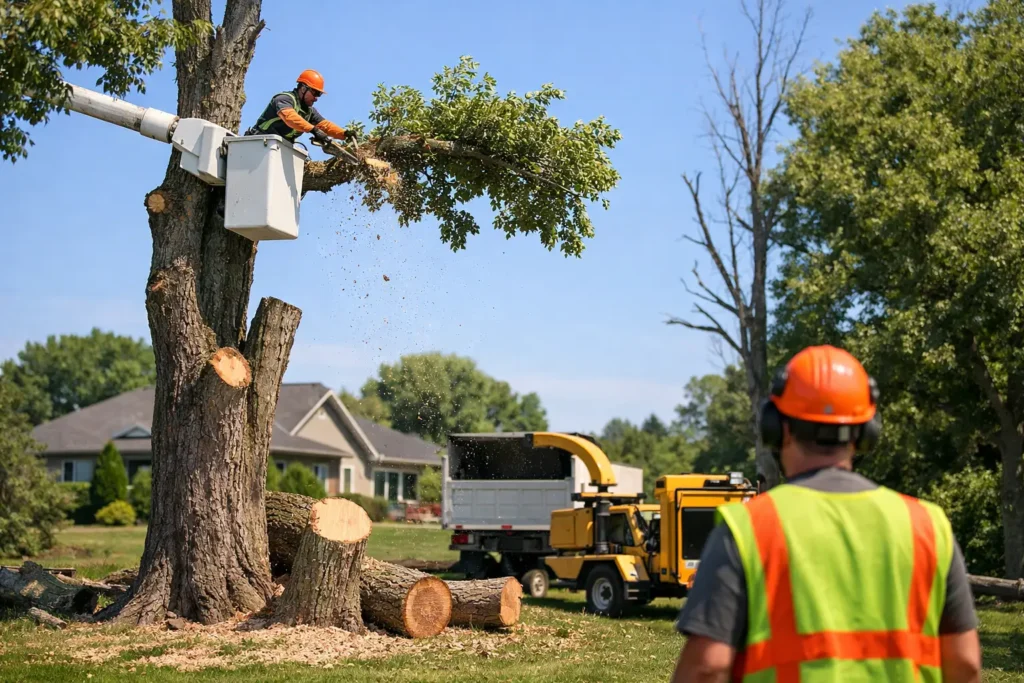
For some jobs, the crew can use ground-based cutting and direct the tree into a clear drop zone. For others, climbing equipment, ropes, rigging, or elevated access may be required to remove material piece by piece. Large branches are managed carefully so they do not strike roofs, crush garden features, damage fences, or tear up lawns below.
Good planning also includes setting up an exclusion area. Children, pets, vehicles, and anyone not involved in the work need to be clear of the job zone. If a tree is close to a shared driveway, road, or neighboring access, the work may need additional coordination. Safety is not just about protective gear. It is about controlling what happens around the tree from start to finish.
Overhead power lines require particular caution. Never assume a branch is safely clear because it has not touched a line before. Wind, weight, and cutting movement can change the situation quickly. A professional assessment will identify whether extra precautions, specialist coordination, or a different approach is needed.
Difficult Access Does Not Mean the Job Cannot Be Done
Many Tauranga properties have mature planting, steep sections, narrow driveways, rear yards, or limited room between homes. These sites need more thought, not less. The right crew will plan how people, equipment, and material will move through the property without creating unnecessary damage.
Sometimes the most efficient option is not the biggest machine. A confined backyard may call for climbing and manual handling, while an accessible site may benefit from chipping equipment or machinery that reduces labor and removes waste quickly. Ground protection can be used where needed to limit damage to lawns, paving, and garden edges.
This is especially relevant for palms, large hedges, yuccas, and self-seeded trees that have grown in awkward places. They can look like small jobs until sharp fronds, heavy trunks, dense root systems, or tight access turn them into a bigger cleanup task. A site-specific plan keeps the work practical and orderly.
Do You Need the Stump Removed Too?
Removing the tree and removing the stump are separate parts of the job. Leaving a stump can be suitable if it is out of sight, does not affect mowing or access, and the area will remain natural. It can also save cost where future landscaping is not planned.
If you want to lay lawn, install a garden, build a fence, create vehicle access, or prepare for construction, stump grinding is usually the cleaner option. Grinding removes the visible stump and reduces the obstruction below ground level, leaving the area easier to manage. The remaining mulch can often be spread on site or removed, depending on the plan for the area.
Roots may continue beyond the ground stump, so it is worth discussing the end use of the site during the assessment. The best approach for a new garden bed may differ from what is needed for paving, a retaining wall, or a building project.
The Clean-Up Is Part of the Job
A removal is not finished when the tree hits the ground or the final branch comes down. Branches, logs, sawdust, and chips can quickly make a property harder to use than before. Discussing green-waste management before work begins gives everyone a clear expectation of the finished result.
Some customers want chipped material retained for mulch, or logs cut into manageable lengths for firewood. Others want all vegetation removed so the section is ready for the next stage. Both are reasonable choices. The key is agreeing on it before the job starts, rather than leaving a pile of material that was never part of the plan.
At Prime Tree Services, the focus is on complete site management: assessing the work, carrying it out carefully, managing green waste as agreed, and leaving the area clean and tidy. That is particularly valuable when a property is being prepared for sale, tenancy, landscaping, or a new build.
Before You Book a Removal
A few details can make an on-site assessment faster and more accurate. Think about why you want the tree removed, whether you want the stump ground, and what result you want for the area afterward. If access is restricted, let the crew know about locked gates, narrow paths, shared driveways, pets, or sensitive garden areas.
It is also sensible to check whether there are local requirements, protected-tree rules, or boundary considerations that apply to your property. Where a tree sits close to a neighbor’s boundary, clear communication before work starts can prevent avoidable tension later.
If a tree is damaged after a storm or appears to be an immediate hazard, keep people away from it and avoid attempting to pull, cut, or climb it yourself. The safest next step is to have the situation assessed. A well-planned removal can turn a difficult, overgrown, or unsafe corner of the property into clean ground that is ready for whatever comes next.